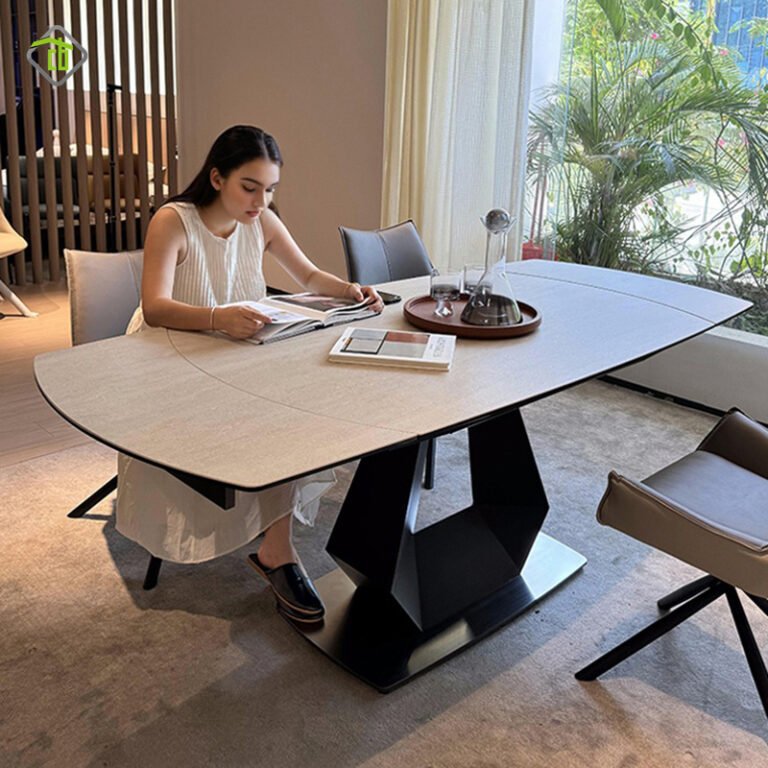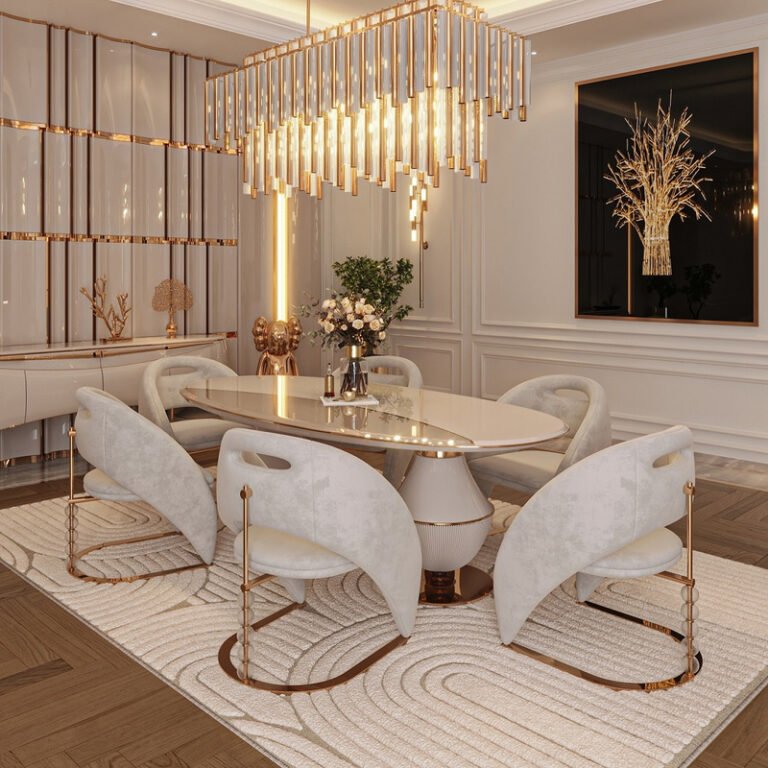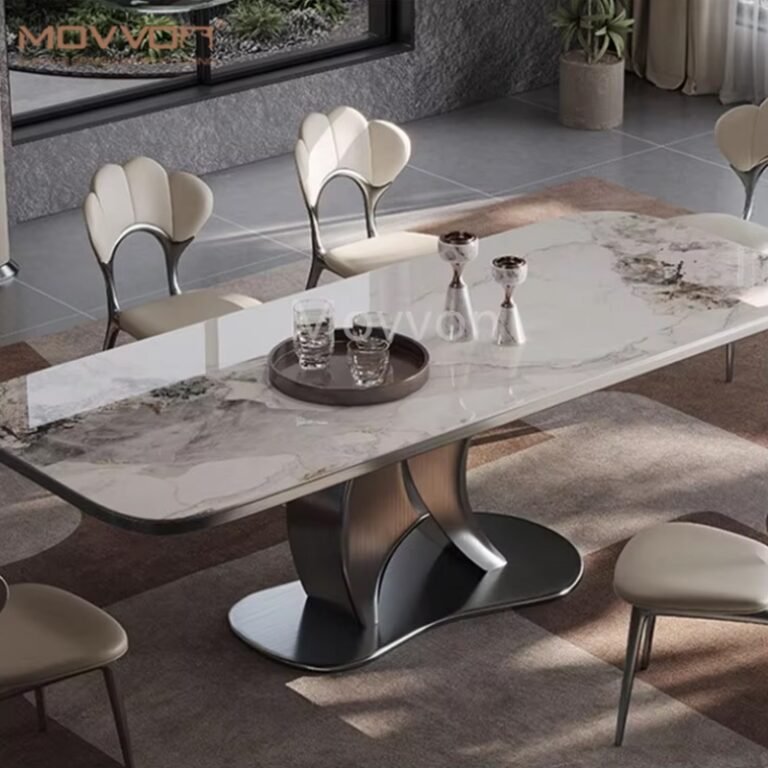

Dining Room Furniture is more than a visual centerpiece—it is one of the most heavily used furniture categories in any home or commercial space. From daily family meals to gatherings, meetings, and celebrations, dining furniture must withstand constant use while maintaining its appearance and structural integrity.
👉 Explore Movvon’s full Dining Room Furniture collection here:
https://movvon.com/product-category/dining-furniture/
One of the most common mistakes buyers make is focusing only on style while overlooking materials. The right materials determine durability, maintenance, comfort, and long-term value. In this comprehensive guide, we break down the most important material-related questions buyers ask when choosing modern dining room furniture—from wood types and tabletops to chair fabrics.
Backed by 16+ years of manufacturing expertise, Movvon Furniture designs and produces dining tables and chairs using carefully selected materials, advanced production technology, and strict quality control to meet global market standards.
What Is the Best Wood for a Dining Room Table?
Wood remains one of the most popular materials for dining room furniture because of its warmth, strength, and timeless appeal. However, not all wood performs the same in a dining environment.
Key Qualities to Look for in Dining Table Wood
A good dining table wood should offer:
- High structural stability
- Resistance to warping and cracking
- Good load-bearing capacity
- Compatibility with finishes and coatings
Best Wood Types for Dining Room Tables
1. Oak (Red Oak & White Oak)
Oak is one of the most widely used woods in dining room furniture.
Pros:
- Extremely durable
- Strong grain pattern
- Resistant to daily wear
- Ages beautifully over time
Best for:
Family dining tables, extendable dining tables, long-term use.
2. Walnut
Walnut is a premium hardwood known for its rich color and smooth grain.
Pros:
- Elegant, dark appearance
- Strong but not overly heavy
- Excellent for modern and luxury designs
Best for:
High-end dining room furniture and statement pieces.
3. Ash Wood
Ash offers a balance between strength and flexibility.
Pros:
- Shock-resistant
- Light, natural appearance
- Smooth grain suitable for modern finishes
Best for:
Contemporary dining furniture and Scandinavian-inspired designs.
4. Beech Wood
Beech is commonly used for dining chairs and table bases.
Pros:
- Hard and dense
- Easy to shape
- Cost-effective
Best for:
Chair frames, legs, and structural components.
Woods to Use with Caution
- Pine: Softwood, easily dented
- Rubberwood: Affordable but less durable long-term
✅ Movvon Approach: We carefully select wood species based on table structure, extension mechanisms, and load requirements, ensuring long-term stability in both residential and commercial settings.
Solid Wood vs. Veneer: Which Is Better for Dining Furniture?
This is one of the most debated questions in dining room furniture purchasing—and the answer depends on usage, budget, and expectations.
Solid Wood Dining Furniture
What It Is:
Made entirely from natural wood planks.
Advantages:
- Long lifespan
- Can be refinished multiple times
- Natural texture and weight
Disadvantages:
- Higher cost
- Sensitive to humidity changes
- Heavier
Best For:
High-end homes, long-term ownership, premium markets.
Veneer Dining Furniture
What It Is:
A thin layer of real wood bonded to a stable core (plywood, MDF, or engineered board).
Advantages:
- More dimensionally stable
- Resistant to warping
- Lower cost
- Consistent appearance
Disadvantages:
- Cannot be refinished repeatedly
- Quality varies by manufacturer
Which Is Better for Modern Dining Room Furniture?
In modern dining furniture manufacturing, high-quality veneer over engineered cores often outperforms solid wood in real-life dining conditions.
✅ Less movement
✅ Better for large tabletops
✅ More compatible with extension systems
Movvon Furniture frequently uses engineered veneer structures for extendable dining tables to ensure smooth operation, flat surfaces, and long-term reliability.
Are Marble Dining Tables Hard to Maintain?
Marble dining tables are admired for their luxury and natural beauty—but they come with specific maintenance challenges.
Pros of Marble Dining Tables
- Unique natural veining
- Luxurious appearance
- Cool, smooth surface
Cons of Marble for Dining Use
- Porous surface absorbs liquids
- Easily stained by wine, coffee, oil
- Sensitive to acids (lemon, vinegar)
- Requires regular sealing
Is Marble Practical for Everyday Dining?
For daily-use dining room furniture, marble can be high-maintenance. It works best in:
- Formal dining rooms
- Low-traffic spaces
- Decorative or occasional-use tables
Modern Alternative: Sintered Stone
Because of marble’s limitations, many manufacturers—including Movvon—now offer sintered stone (rock plate) dining tables that replicate marble’s appearance with superior performance.
What Is the Most Durable Fabric for Dining Chairs?
Dining chairs experience frequent friction, spills, and cleaning. Fabric durability is critical for both residential and commercial dining room furniture.
Key Performance Factors for Chair Fabrics
- Abrasion resistance (Martindale rating)
- Stain resistance
- Ease of cleaning
- Color fastness
Most Durable Dining Chair Fabrics
1. Performance Polyester
Why it works:
- Highly abrasion-resistant
- Stain-resistant coatings
- Easy to clean
- Cost-effective
Best for:
Family homes, restaurants, high-use dining spaces.
2. Faux Leather (PU Leather)
Advantages:
- Wipe-clean surface
- Water-resistant
- Consistent appearance
Considerations:
- Lower breathability than fabric
- Quality varies widely
3. Genuine Leather
Pros:
- Extremely durable
- Develops character over time
- Easy to wipe clean
Cons:
- Higher cost
- Requires conditioning
Best for:
Premium dining room furniture and hospitality environments.
4. High-Performance Fabric (Commercial Grade)
Often used in hotels and restaurants.
Features:
- Stain-proof finishes
- Fire resistance options
- High Martindale scores
✅ Movvon Advantage: Our dining chairs are tested for abrasion resistance and long-term comfort, ensuring they meet international B2B quality standards.
Sintered Stone vs. Quartz: Which Is Better for a Dining Tabletop?
Both sintered stone and quartz are popular alternatives to natural stone—but they perform differently in dining environments.
What Is Sintered Stone?
Sintered stone is made by compressing natural minerals under extreme heat and pressure.
Key Benefits:
- Non-porous
- Scratch-resistant
- Heat-resistant
- UV-resistant
- Food-safe surface
What Is Quartz?
Quartz is an engineered stone made from crushed quartz bound with resin.
Benefits:
- Uniform appearance
- Strong and durable
- Lower cost in some markets
Sintered Stone vs. Quartz: Dining Table Comparison
| Feature | Sintered Stone | Quartz |
|---|---|---|
| Heat resistance | Excellent | Moderate |
| Scratch resistance | Excellent | Good |
| UV resistance | Excellent | Limited |
| Outdoor suitability | Yes | No |
| Resin content | None | Contains resin |
Which Is Better for Dining Room Furniture?
For dining tables—especially extendable and multifunctional designs—sintered stone is superior.
✅ Handles hot dishes
✅ Resists stains and scratches
✅ Ideal for daily use
This is why Movvon Furniture heavily invests in rock plate dining table solutions for global markets.
How Material Choices Impact Extendable Dining Tables
Extendable dining tables place higher demands on materials due to moving parts and load distribution.
Best material combinations include:
- Sintered stone tops + steel frames
- Veneered engineered wood + metal extension rails
- Solid wood bases + reinforced mechanisms
Movvon’s patented extension systems are engineered alongside material selection to ensure:
- Smooth expansion
- Long-term stability
- Minimal maintenance
Why Material Quality Matters for OEM & ODM Dining Furniture
For distributors, retailers, and e-commerce brands, material choice directly affects:
- Product returns
- Customer reviews
- Brand reputation
- Long-term margins
Movvon Furniture provides material consulting, testing, and customization as part of our OEM & ODM services—helping partners select the right materials for their target markets.
Final Thoughts: Choosing Dining Room Furniture That Lasts
The best dining room furniture balances:
- Aesthetic appeal
- Material durability
- Ease of maintenance
- Long-term value
By understanding wood types, tabletop materials, and chair fabrics, buyers can make informed decisions that stand the test of time.